


DNA Barcoding Kits
DNA barcoding lab activity that combines PCR, gel electrophoresis, DNA sequencing, and bioinformatics to teach students how to identify species of fish, mammals, insects, and fungi.


Overview
Why Teach DNA Barcoding?
Is that “red snapper” on the menu actually tilapia? What pollinators are visiting your school or community garden? DNA barcoding gives students the tools to find out.
DNA barcoding helps turn mystery samples into evidence-based species identifications by comparing a short DNA sequence to trusted reference databases. With Bio-Rad DNA Barcoding Kits, students run the DNA barcoding process themselves using the same approach researchers use to catalog global biodiversity through the International Barcode of Life Project (iBOL). Unlike traditional PCR labs that end with electrophoresis, DNA Barcoding Kits extend the investigation into DNA sequencing and bioinformatics, allowing students to use their own data to answer authentic biological questions.
The activity scales from high school to college biology. It works equally well as a lab activity or as the basis for an independent research project, capstone, or science fair investigation.
At a Glance
- Hands-on sample-to-species identification workflow
- Eight student workstations (2–4 students per workstation)
- Up to 16 fish, mammal, insect, or fungal samples or combine groups
- Builds on a basic understanding of PCR
- Sequencing sent out to a third-party provider (not included in kit); sequence analysis using freeware
The DNA Barcoding Workflow
With DNA Barcoding Kits, students complete a real DNA barcoding workflow to test for marketplace species substitution or investigate local biodiversity:
- Collect and prepare tissue sample and perform DNA extraction, PCR amplification, and gel electrophoresis
- Submit samples for DNA sequencing to a third-party sequencing facility (not included; turnaround time varies by provider, so confirm timing before scheduling your bioinformatics session)
- Once sequencing results are received, students complete the bioinformatics steps below to assemble their data and identify the species
- Connect classroom data to real global barcoding initiatives
Example: A student sample labeled “red snapper” from a local market might return a BLAST match for tilapia, a real result that turns a lab exercise into a food-fraud investigation.
Example: A “honeybee” sample from the garden might return a BLAST match for a completely different pollinator species.
Need equipment to run this lab? See Related Products below.
How the Bioinformatics Workflow Is Performed
Once sequencing results come back from your sequencing provider (not included), students complete the identification workflow:
- Use ContigCreator (see Downloads tab) or other freeware to assemble forward and reverse reads, trim low-quality bases, and generate a consensus DNA sequence.
- Use NCBI BLAST to compare their sequence against a public database and identify the closest species match.
- As an extension, students can compare results with the BOLD Systems database and discuss how reference databases affect species identification.
What Standards and Skills Does This Activity Support?
This activity supports AP Biology, IB Biology, and NGSS-aligned high school courses, as well as introductory and major-level college biology, molecular biology, and genetics labs covering PCR, molecular evolution, biodiversity, and bioinformatics.
By the end of the activity, students will be able to:
- Extract and PCR amplify genomic DNA from a tissue sample
- Interpret an agarose gel to confirm successful PCR amplification
- Assemble forward and reverse sequencing reads into a consensus sequence
- Run and interpret a BLAST alignment to identify a species
- Evaluate the reliability and limitations of a genetic species match
The Science Behind DNA Barcoding
Taxonomists traditionally identify species by physical characteristics and habitat. DNA barcoding adds a molecular layer: sequencing a conserved gene region and comparing it to reference databases. The cytochrome c oxidase I (COI) gene, for example, is a mitochondrial gene found in fish, birds, butterflies, flies, and other animal groups; the internal transcribed spacer (ITS) region serves the same role in fungi. Small, consistent sequence differences between species make each of these regions a usable “barcode”. This approach underpins biodiversity assessment, conservation work, and food-marketplace regulation.
More DNA Barcoding Kit Information
Each DNA Barcoding Kit contains a DNA Extraction Module and PCR Module, each of which can also be purchased separately. DNA Barcoding Kit bundles containing reagents for agarose electrophoresis are also available.
Additional DNA barcoding resources include:
- DNA Barcoding Kits YouTube Playlist — a curated collection of videos covering the science, techniques, and real-world applications of DNA barcoding.
- Fish DNA Barcoding Quiz Game — a Jeopardy!-style quiz game that helps prepare your students for DNA barcoding lab activities.
- Fish Flashcard activity — a fun way to introduce the Fish DNA barcoding lab activity to your class.
Related Products
- T100 Thermal Cycler for the Classroom
- Professional Adjustable-Volume Digital Micropipets
- Mini-Sub™ Cell GT System for the Classroom
Yes. The kit is designed for use across Biology, AP Biology, IB Biology, and other NGSS-aligned high school life science courses, as well as introductory and major-level college biology, molecular biology, and genetics labs. It can also be used in independent student or educational science projects.
Kits and refill modules are available for fish, mammalian, insect, and fungal samples, each using a standard barcode gene region (COI for animals; ITS for fungi).
No, but you may use any university or commercial DNA sequencing service. Refer to the instruction manual for sample processing requirements and contact your chosen service provider about their specific requirements, turnaround time, and cost.
Students use ContigCreator, Bio-Rad's free downloadable sequence assembly software, to assemble and analyze DNA sequencing results before identifying species with NCBI BLAST. Other compatible freeware may also be used.
Yes. The reagents and components are stable at room temperature, so the full kit ships at ambient temperature to keep shipping costs down. Once your kit arrives, store the components as labeled—some in the refrigerator (4°C) and some in the freezer (-20°C)—to maintain optimal shelf life.
Refer to the Lab Preparation Checklist and Related Products listing. Bio-Rad DNA Barcoding Kits will perform reliably when using any thermal cycler capable of meeting the specified cycling parameters and any electrophoresis system capable of meeting the specified run parameters.
BOLD-SDP was retired. The DNA Barcoding Kit bioinformatics activity has been updated to use ContigCreator and NCBI BLAST in its place.
1665100EDU Fish DNA Barcoding Kit has been updated to 17007432EDU Fish DNA Barcoding Kit.
Specifications
Kit Contents
Ordering

PCR and bioinformatics kit, includes DNA Extraction Module (12016408EDU) and Fish PCR Module (12016300EDU); for extraction and PCR amplification of up to 16 fish DNA and control samples (8 student workstations, 2 samples per workstation, 2–4 students per workstation); for educat

PCR and bioinformatics kit bundle, includes Fish DNA Barcoding Kit (17007432EDU) and reagents for agarose gel electrophoresis of up to 16 fish DNA and control samples (8 student workstations, 2 samples per workstation, 2–4 students per workstation); for&nbs
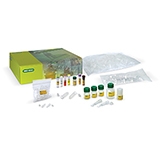
PCR and bioinformatics kit, includes DNA Extraction Module (12016408EDU) and Mammals, Insects, and Fungi PCR Module (12016353EDU); for extraction and PCR amplification of up to 16 DNA and control samples (8 student workstations, 2 samples per workstation, 2–4 students per workst

PCR and bioinformatics kit bundle, includes Mammals, Insects, and Fungi DNA Barcoding Kit (17007366EDU) and reagents for agarose gel electrophoresis of up to 16 DNA and control samples (8 student workstations, 2 samples per workstation, 2–4 students per workstation); for educational u

PCR and bioinformatics kit, includes two DNA Extraction Modules (12016408EDU), one Fish PCR Module (12016300EDU), and one Mammals, Insects, and Fungi PCR Module (12016353EDU); for educational use only

PCR and bioinformatics kit bundle, includes two DNA Extraction Modules (12016408EDU), one Fish PCR Module (12016300EDU), one Mammals, Insects, and a Fungi PCR Module (12016353EDU), agarose, and TAE buffer; fo
Refills

Reagents and plastic consumables for chromosomal DNA extraction, includes resuspension, lysis, and neutralization solutions, wash buffer, matrix, spin filters, and 2.0 ml microtubes for up to 16 extractions; for educational use only

Reagents for chromosomal DNA extraction, includes resuspension, lysis, and neutralization solutions, wash buffer, matrix, and spin filters for up to 16 extractions; for educational use only

Reagents and consumables for PCR amplification of up to 16 fish DNA samples and control DNA, contains 2x master mix, PCR primers, control DNA, sterile water, molecular weight ruler, fluorescent DNA loading dye and stain, and PCR tubes; for educational us

Reagents and consumables for PCR amplification of up to 16 DNA samples and control DNA, contains 2x master mix, PCR primers, control DNA, sterile water, molecular weight ruler, fluorescent DNA loading dye and stain, and PCR tubes; for educational use only
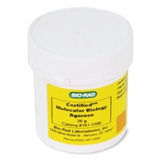

100 ml, TAE nucleic acid electrophoresis buffer solution, pH 8.0; education use only
Downloads
-
ContigCreator-MacContigCreator-Mac
File download for ContigCreator sequence analysis software
-
ContigCreator-WinContigCreator-Win
File download for ContigCreator sequence analysis software
-
Fish DNA Barcoding DatasetFISH-DNA-BARCODING-DATASET
Fish DNA Barcoding Dataset.
-
Mammalian Insect DNA Barcoding DatasetMAMMAL-INSECT-DNA-DATASET
Mammalian Insect DNA Barcoding Dataset.
-
Fungal DNA Barcoding DatasetFUNGAL-DNA-BARCODING-DATASET
Fungal DNA Barcoding Dataset.