


From DNA to Data

The Common Workflow Underpinning Modern NGS
DNA sequencing reveals the order of nucleotides in a DNA molecule. Next‑generation sequencing (NGS) builds on this by reading millions of DNA fragments at once, enabling applications such as whole‑genome, exome, transcriptome, and targeted sequencing.
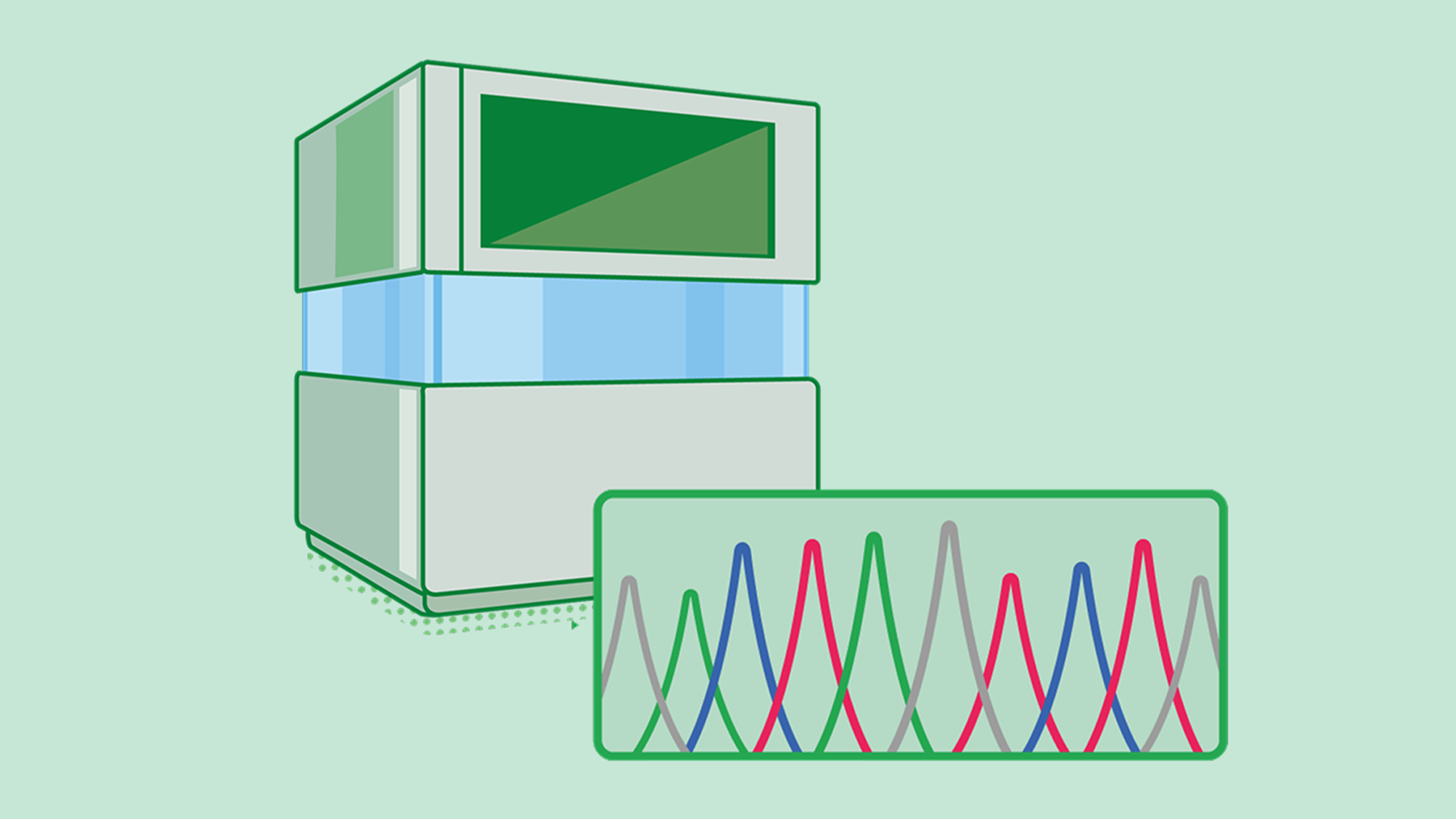
While different NGS platforms use different chemistries, the overall workflow is largely the same.1, 2 DNA or RNA is first prepared into sequencing‑ready libraries, then sequenced to generate data that is analyzed to uncover meaningful genetic information.
Understanding these core workflow stages helps clarify where variability can arise, and where additional technologies can strengthen confidence in results.
Featured Content
A Step‑by‑Step View of NGS
A typical NGS pipeline consists of four main stages:
1. Sample Preparation and Nucleic Acid Extraction
The workflow begins with isolating DNA or RNA from a biological sample, from formalin-fixed, paraffin-embedded (FFPE) tissue, or from liquid biopsies. Early quality checks ensure the genetic material is intact, setting the stage for reliable downstream results.
2. Library Preparation
Extracted DNA or RNA is fragmented, adapters and barcodes are added, and targets are enriched to create sequencing‑ready libraries. Quantifying the final library ensures the correct amount of material is loaded on the sequencer, which helps produce high‑quality data and detect rare variants.
3. Sequencing
NGS platforms, such as Illumina® or Ion Torrent systems, generate millions of sequence reads in parallel, enabling high‑throughput analysis of genomes, exomes, or targeted regions.3-5
4. Data Analysis
Sequencing data are processed in stages to help turn raw reads into insights:
- Primary analysis: raw signals are converted into readable DNA sequences and quality scores to confirm data reliability
- Secondary analysis: the sequence reads are compared to a reference genome to reconstruct the sample’s DNA sequence and identify genetic variants
- Tertiary analysis: the results are interpreted to help you understand what those variants mean biologically, identify potential biomarkers, and uncover possible causes of disease


Better Together: ddPCR™ Technology + NGS
Learn how integrating Droplet Digital™ PCR (ddPCR) technology with NGS can improve data confidence and streamline oncology research workflows. Access the infographic to see it in action.
Featured Content
ddPCR Technology Supports Each NGS Stage
Digital PCR can support NGS at multiple points: before sequencing begins, after data is generated, and in downstream research applications.

Pre-NGS: Sample QC and Library Preparation
Absolute Library Quantification: ddPCR technolgy uses Poisson statistics to quantify correctly formed libraries, helping load the right amount of material for sequencing runs.
QC for Low‑Abundance Targets: By improving library quantification accuracy, ddPCR technology enables better library balancing and improves analytical sensitivity for challenging samples.
Post-NGS (Validation and Confirmation)
Orthogonal Validation: ddPCR technology provides an independent method to confirm rare variants or copy number variations (CNVs) identified by NGS, supporting higher confidence in reported results.
Error Correction: NGS can introduce low-frequency errors during PCR amplification; ddPCR technology offers absolute quantification without reliance on standard curves.

Research Applications
Sensitive Mutation Tracking in Oncology Research: ddPCR technology enables detection of low frequency genetic changes associated with clonal evolution and treatment response in oncology research. It provides absolute, highly precise quantification of known mutations and supports confident measurement of rare variants and small fold changes in oncology research samples.6
Minimal Residual Disease (MRD) Research: ddPCR technology enables ultrasensitive longitudinal monitoring of tumor informed variants in research samples and is frequently used alongside NGS in hybrid workflows to track residual disease dynamics with high reproducibility in oncology research.7, 8
Liquid Biopsy and ctDNA Research: ddPCR technology supports targeted, quantitative measurement of tumor derived DNA in plasma, enabling longitudinal monitoring of molecular response and investigational endpoints across cancer types in research samples.9, 10
Featured Content
Get More From Your Data With NGS and ddPCR Technology
Combine Broad Discovery With Validation
NGS and ddPCR technology serve complementary roles. NGS supports comprehensive genome analysis and target discovery, while ddPCR technology can be used for follow-up and orthogonal validation of detected variants, and for analytical validation of low-frequency variants. Together, they support library quality control and quantification before sequencing, and confirmation of low‑frequency findings when additional quantitative confidence is needed. The table below compares the two across the factors that most affect day‑to‑day workflows.
Two Approaches, Different Strengths11-13
 NGS | 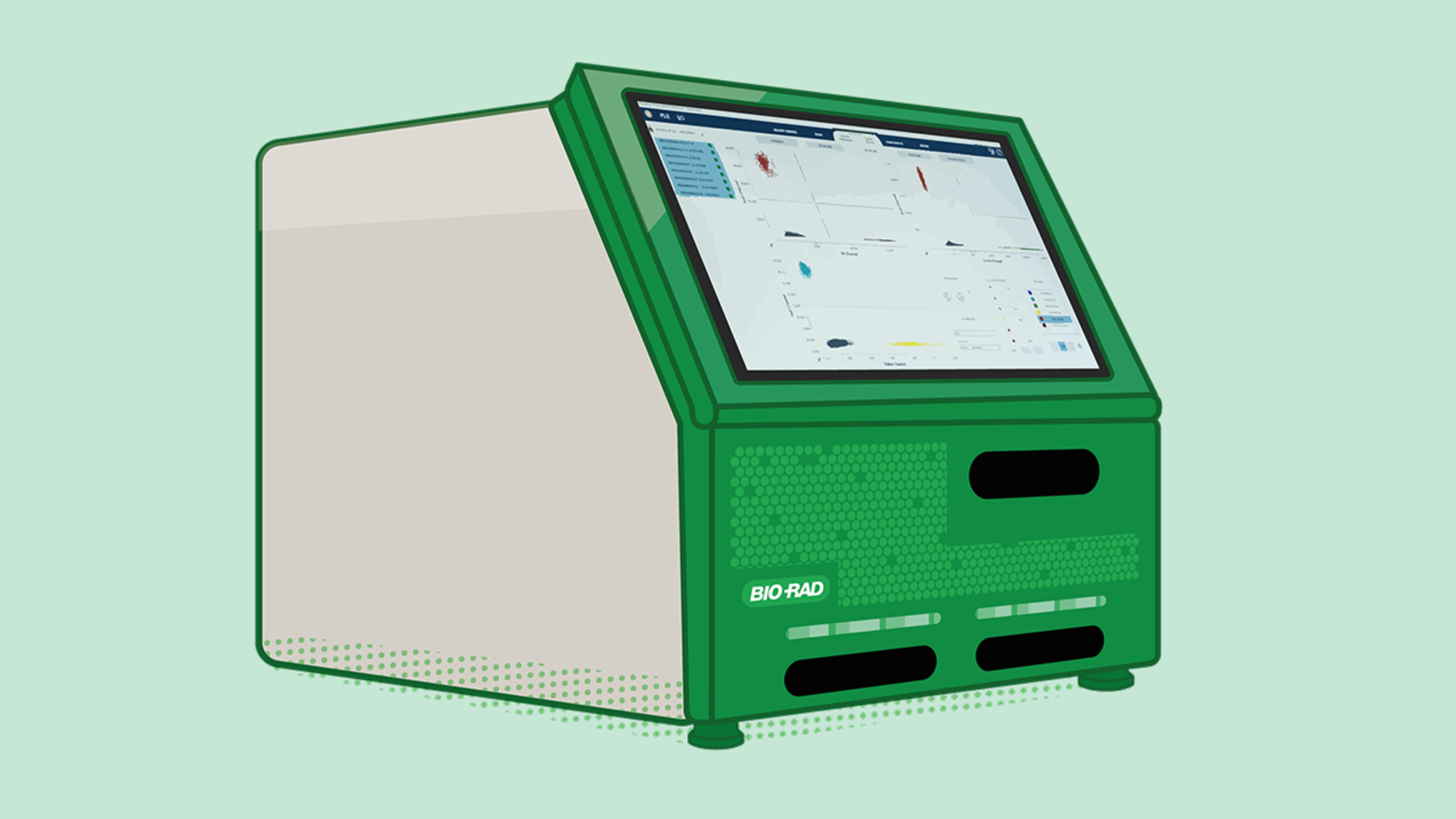 ddPCR Technology | |
|---|---|---|
| Turnaround Time | 5–40 days | 1–3 days |
| Sensitivity | ~0.1% VAF (with UMIs) | ≤0.01% VAF |
| Cost per Sample | $$$ | $ |
| Multiplexing | Hundreds of genes | Screen <50* genes |
| Workflow Complexity | High | Simple, same day |
*Up to 20 targets per run for discrimination, and higher multiplexing for screening.

Improving Next-Generation Sequencing Workflows With Droplet Digital PCR Technology
Despite ongoing advances in sequencing technology, factors such as library amplification bias, sample quality, and variability in library quantification can negatively impact your NGS results.14 Integrating ddPCR technology into your NGS workflows helps you address these challenges by improving sequencing efficiency and confidence in your data. This white paper highlights common bottlenecks across the NGS workflow and explains how ddPCR technology works alongside NGS to overcome them.
Featured Content
Integrate Digital PCR Into the NGS Workflow
Integrating digital PCR technology into NGS workflows can help improve library quantification, enable accurate library balancing, and validate sequencing results. Bio‑Rad’s Droplet Digital PCR Systems are especially well suited for this role, helping increase sequencing efficiency and reduce variability across runs.
In the ddPCR System, each sample is partitioned into thousands of droplets in which PCR amplification occurs independently. After the run, droplets are analyzed individually to determine whether the target sequence is present or absent. By applying Poisson statistics to these results, ddPCR technology delivers absolute quantification of target copies without relying on standard curves, making it a powerful tool for precise measurement within the NGS workflow.
This integrated approach becomes especially valuable in infectious disease research, where accurate verification and quantification are critical.
Combine NGS and ddPCR Technology for Confident Infectious Disease Research
The QX700™ Droplet Digital PCR System* supports infectious disease research by integrating ddPCR technology into NGS workflows. While NGS provides a broad view of genetic variation, ddPCR technology enables verification and quantification of sequencing findings. In this video, collaborators at hVIVO, a contract research organization specializing in infectious and respiratory diseases, shares how the QX700 System* supports infectious disease research and explains the value of combining NGS and ddPCR technologies.
*For Research Use Only. Not for use in diagnostic procedures.
Featured Content
Amplify Sequencing-Ready Fragments
Reliable sequencing starts with libraries you can trust. ddPCR technology helps you keep libraries representative during amplification and quantify only sequencing‑ready molecules, so you can load with confidence and interpret results with fewer unknowns.
Ensure Representation of Low-Abundance Species
After DNA is fragmented, the goal is to amplify only the fragments that are ready for sequencing, without skewing the library. Using ddPCR technology gives you an accurate representation of your original sample by amplifying each DNA fragment independently in thousands of droplets.
This approach reduces competition from highly abundant sequences, making it easier to capture challenging targets such as GC‑rich regions or longer fragments. As a result, your sequencing library reflects the true makeup of your sample, supporting consistent read coverage across difficult regions.
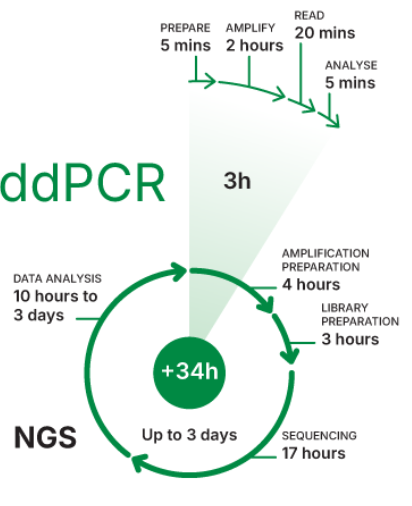
While sequencing can extend beyond a day, ddPCR technology delivers results in hours, helping you verify library amplification and make adjustments before you load the sequencer.
With Bio‑Rad’s Digital PCR Library Quantification Kits, you can accurately quantify and assess library quality prior to loading. This helps you balance libraries more effectively, optimize sequencing runs, and reduce the risk of uneven coverage or ambiguous regions in your final data.

Alexandra Lespagnol
Biological Scientist at Rennes University Hospital“I position digital PCR upstream [of NGS] for the majority of samples, to analyze if the sample has a specific mutation.”
Featured Content
Accurately Quantify NGS Libraries
Load the Right Amount of Amplified Fragments to Improve Pooling and Reduce Repeat Runs
Accurate library quantification is essential for reliable sequencing results.15 Loading too much library can overwhelm the sequencer and lead to mixed or difficult‑to‑interpret data, while loading too little can reduce read depth, create gaps in coverage, and cause rare targets to be missed.
Traditional quantification methods can make this harder. Measuring total DNA or performing titration runs can be time‑consuming and misleading because these approaches count all DNA, including fragments that won’t be sequenced, overestimating the amount of usable library.
More targeted approaches focus only on sequencing‑ready molecules. Adapter‑specific qPCR improves accuracy by measuring fragments that can be sequenced, and the use of digital PCR further increases accuracy by providing absolute quantification.16
Application‑specific kits are now available to use with the QX200™ Droplet Digital PCR System**. For NGS sample preparation, the ddPCR Library Quantification Kit for Illumina TruSeq® was designed to increase the speed and accuracy of library quantification.
As described in the app note below, ddPCR technology can be incorporated directly into the library preparation workflow to precisely quantify and balance Illumina TruSeq® libraries, without the need for external standards. This makes it easier to determine optimal input amounts, pool libraries at equimolar concentrations, and achieve more consistent sequencing performance from run to run.
**For Research Use Only. Not for use in diagnostic procedures. In vitro diagnostic (IVD) versions are available for certain products as specified.
Featured Content
Validate Sequencing Results
Confirm What NGS Reveals
The level of validation you need depends on your quality requirements and what you’re trying to confirm. While NGS can identify genomic changes, such as mutations, copy number changes, or rearrangements, it often isn’t the final step.17, 18 A complementary method is typically required to obtain finer quantification data, or screen larger numbers of samples.19
As shown in multiple published studies, ddPCR technology has become a trusted, orthagonal method for validating NGS data in translational and clinical research.20-24
Featured Content
Conclusion
ddPCR technology has fully integrated into many NGS workflows. Library quantification, library generation, and results validation are among the many areas in which ddPCR technology can complement current methodologies.
Featured Content
Related Products

Digital PCR Library Quantification Kits
Measure the quality of DNA libraries prior to sequencing on the Illumina.

QX Droplet Digital PCR Systems
Bio‑Rad’s QX ddPCR Systems support targeted checkpoints across the NGS workflow by partitioning samples into droplets and enabling absolute quantification using Poisson statistics.
Featured Content
References
- Metzker ML et al. (2010). Sequencing technologies: the next generation. Nature Reviews Genetics 11, 31–46.
- Goodwin S et al. (2016). Coming of age: ten years of next generation sequencing technologies. Nature Reviews Genetics 17, 333–351.
- Illumina. (n.d.). Next Generation Sequencing (NGS) Technology Overview. https://www.illumina.com/science/technology/next-generation-sequencing.html
- Thermo Fisher Scientific. (n.d.). Next Generation Sequencing: Overview & Workflow. https://www.thermofisher.com/us/en/home/life-science/cloning/next-generation-sequencing.html
- Foox J et al. (2021). Performance assessment of DNA sequencing platforms in the ABRF Next-Generation Sequencing Study. Nature Biotechnology 39, 1129–1140.
- Olmedillas-López et al. (2022). Current and emerging applications of droplet digital PCR in oncology: an updated review. Molecular Diagnosis & Therapy 26, 61–87.
- Ip BBK et al. (2024). Application of droplet digital PCR in minimal residual disease monitoring of rare fusion transcripts and mutations in haematological malignancies. Scientific Reports 14, 6400.
- Assanto GM et al. (2023). Can digital droplet PCR improve measurable residual disease monitoring in chronic lymphoid malignancies? Frontiers in Oncology 13, 1152467.
- Kang SW et al. (2025). Tumor-informed circulating tumor DNA detection for personalized monitoring of treatment response in epithelial ovarian cancer. Practical Laboratory Medicine 47, e00500.
- Ugur G et al. (2022). The clinical utility of droplet digital PCR for profiling circulating tumor DNA in breast cancer patients. Diagnostics 12, 3042.
- Szeto S et al. (2025). Performance comparison of droplet digital PCR and next‑generation sequencing for circulating tumor DNA detection in non‑metastatic rectal cancer. Cancer Med 14, e70943.
- Ouh YT et al. (2026). Diagnostic accuracy of the droplet digital PCR POLE mutation test in endometrial cancer: comparison with Sanger sequencing and NGS. J Gynecol Oncol 37, e83.
- Mittal AK et al. (2024). Economic implications of ddPCR and NGS‑based noninvasive prenatal testing for fetal aneuploidy screening. International Journal of Public Health Science 13, 1809–1818.
- Schwartz S et al. (2011). Detection and removal of biases in the analysis of next-generation sequencing reads. PLoS One 6, e16685.
- White RA et al. (2009). Digital PCR provides sensitive and absolute calibration for high throughput sequencing. BMC Genomics 10, 116.
- Hodges S et al. (2015). Bio-Rad: ddPCR quantification and QC of Illumina TruSeq NGS libraries.
- Lincoln SE et al. (2019). A rigorous interlaboratory examination of the need to confirm next-generation sequencing-detected variants with an orthogonal method in clinical genetic testing. Journal of Molecular Diagnostics 21, 318–329.
- Crooks K et al. (2023). Recommendations for next-generation sequencing germline variant confirmation. Journal of Molecular Diagnostics 25, 411–427.
- Provenzano M, Mocellin S. (2007). Complementary techniques. Advances in Experimental Medicine and Biology 593.
- Boettger LM et al. (2012). Structural haplotypes and recent evolution of the human 17q21.31 region. Nature Genetics 44, 881–885.
- Miyake K et al. (2013). Comparison of genomic and epigenomic expression in monozygotic twins discordant for Rett syndrome. PLoS One 8, e66729.
- Taylor SD et al. (2014). Targeted enrichment and high resolution digital profiling of mitochondrial DNA deletions in human brain. Aging Cell 13, 29–38.
- Newman AM et al. (2016). Integrated digital error suppression for improved detection of circulating tumor DNA. Nature Biotechnology 34, 547–555.
- Oellerich M et al. (2022). Donor-derived cell-free DNA as a diagnostic tool in transplantation. Frontiers in Genetics 13, 1031894.