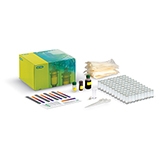


Giant Panda Problem Kit #17002878EDU

Safety Data Sheet
Overview
The Giant Panda Problem Kit for AP Biology puts your students in the role of conservation scientists as they monitor the fertility of giant pandas using the power of ELISA. After an initial structured inquiry activity about immunodetection using ELISA, students will design their own ELISA protocol to check for biomarkers in simulated panda samples. As a ThINQ!™ Investigation, the kit is designed to enable students to think through scientific discovery.
Features and Benefits
The Giant Panda Problem Kit is the ultimate way to help your students understand physiological systems by combining immunology, reproductive endocrinology, epidemiology, and the unique properties of antibodies that have revolutionized medicine.
- Aligns with AP Biology Big Ideas 2 and 4
- Enables both qualitative and quantitative measurements of reactions
- Allows students to perform genuine antibody and hormone detection ELISAs
- Includes curriculum and materials for 8 student workstations
For more information visit the product page.
Related Products
- Photosynthesis and Cellular Respiration Kit for AP Biology (17001238EDU)
- Biofuel Enzyme Reactions Kit for AP Biology (17001235EDU)
- pGLO™ Transformation and Inquiry Kit for AP Biology (1660335EDU)
Recommended Products