


Overview
Bio-Rad’s Mission: Control helps labs determine the right QC strategy to minimize risk of harm to the patient. We help answer questions like, what is your level of confidence that out-of-control conditions are being quickly identified? How often should controls be run for specific assays—is there an optimal frequency? How can QC be managed to minimize the risk of releasing incorrect patient results? Laboratories without a properly designed QC strategy may not be able to quickly detect critical system malfunctions before releasing erroneous patient results.
Optimized QC Strategy

Increased level of confidence
Mission: Control helps increase a lab’s level of confidence to quickly identify out of control conditions. If your QC plan includes less than optimal QC frequency, ranges, and rules, you may be headed toward unreliable results without warnings.
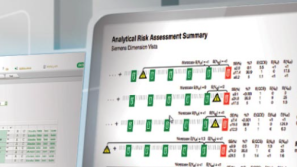
Minimized risk of reporting incorrect results
A patient risk approach to QC is a step toward improving quality assurance and patient care. We can help you understand what this means for your lab and how to take steps to implement an effective QC plan for your analytical phase of testing.

Guided QC design for each test
We help you quantify your risk of reporting incorrect patient results. You can confidently select QC rules and frequency that fit your lab’s acceptable risk level and assess how much you can lower your risk based upon instrument performance.
Key benefits of Mission: Control - Patient Risk Managed QC

Evaluate your test method performance based on your QC results

Know your current risk of reporting incorrect patient results

Assess how much you can lower your risk, based on your historical instrument performance

Confidently select rules and frequency that fit your institution’s risk tolerance

Improve operational effectiveness and regulatory compliance

Intuitive and user-friendly, web-based application with clear outputs
Customer Testimonials
“Bio-Rad Mission: Control is an innovative tool that enables my laboratory to select the best QC rules and frequency to minimize the risk of delivering inaccurate results and improve the safety of the patients.”
Core Lab Director
“Bio-Rad Mission: Control provides a good approach to optimize the relationship between cost and quality.”
Central Lab QC Director
“Bio-Rad Mission: Control finds the right balance between increased QC frequency and retesting many patient samples.”
Clinical Lab Quality Assurance Manager
Resources
Severity of Patient Harm

Patient Risk Management: Severity of Harm Global Survey
Discover this global survey of medical biology professionals, assessing the harm caused by lab errors & exploring the lab community's perspective on patient harm from an erroneous reported result.

Severity of Harm Category Designation Survey Results
Knowing an assay's Severity of Harm category is a key component in performing a Risk Assessment to determine acceptable QC practices.

Help Create Consensus in Severity of Harm Scales
Advance lab quality control! Take our survey to rate analyte harm severity, contribute to a global standard, and improve patient safety.
Videos

Explore the shift to a Patient Risk Approach in QC
Learn about risk-managed QC strategy based on severity of harm category, computing a Risk Management Index to enhance patient safety, and practical implementation in routine.

Bio-Rad Mission: Control
This 90 second video presents Bio-Rad Mission: Control, the first objective risk management software for patient risk-based QC planning.

Bio-Rad Mission: Control - Risk Simulation - Part 1
This video covers components of Mission: Control, a QC simulator, and simulates a test explaining risk and how it works.
Article
Assessing the Impact of the Frequency of Quality Control Testing on the Quality of Reported Patient Results