

From Cells to Crime Scenes: Engineering Bacteria as Living Biosensors
What if your students could engineer living cells to detect an unknown substance? In this free webinar for science educators, Karen Davis shares a classroom lab that turns bacterial gene expression into a forensic investigation. Leave with a flexible way to connect genetic engineering and gene expression to real-world biotechnology applications.
Wednesday
3:30 PM PT/
6:30 PM ET
In this session, you'll learn how to:
- Guide students as they use the pGLO Bacterial Transformation Kit to engineer bacteria into living biosensors that detect a target chemical signal in unknown samples
- Show how biological sensors, gene regulation, and reporter genes work together to produce a detectable response
- Adapt the same lab into investigations of forensic evidence, environmental contamination, food safety, and more
You'll leave with a flexible way to connect genetic engineering and gene expression to real-world biotechnology applications.
Speaker

Karen Davis
AP Biology Educator and College Board Consultant
Karen has been a reader, trainer, and College Board consultant for AP Biology, and has taught the course for more than 20 of her 36 years in education. She has worked with students and educators in both urban and rural schools.
Get the Featured Kit
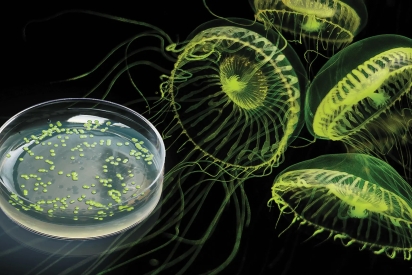
Give your students the thrill of making bacteria glow. With this classic kit, students insert a jellyfish gene into Escherichia coli and watch their transformed colonies fluoresce green under UV light. It's a vivid, visible way to teach the central dogma and genetic engineering. Because the glow switches on only in the presence of arabinose, students see gene regulation in action, which makes it the ideal starting point for biosensor investigations like the one in this webinar. The kit includes materials for 32 students, and the lab runs in two 50-min sessions.