


Diabetes is becoming increasingly common1. Diseases like type 2 diabetes often develop without early symptoms, they can go undetected for years. As the disease progresses, it can damage organs such as the eyes, kidneys, nerves, heart, liver, and blood vessels. Early screening allows for timely treatment to slow the disease and reduce complications. Managing blood sugar effectively helps lower the risk of these complications.
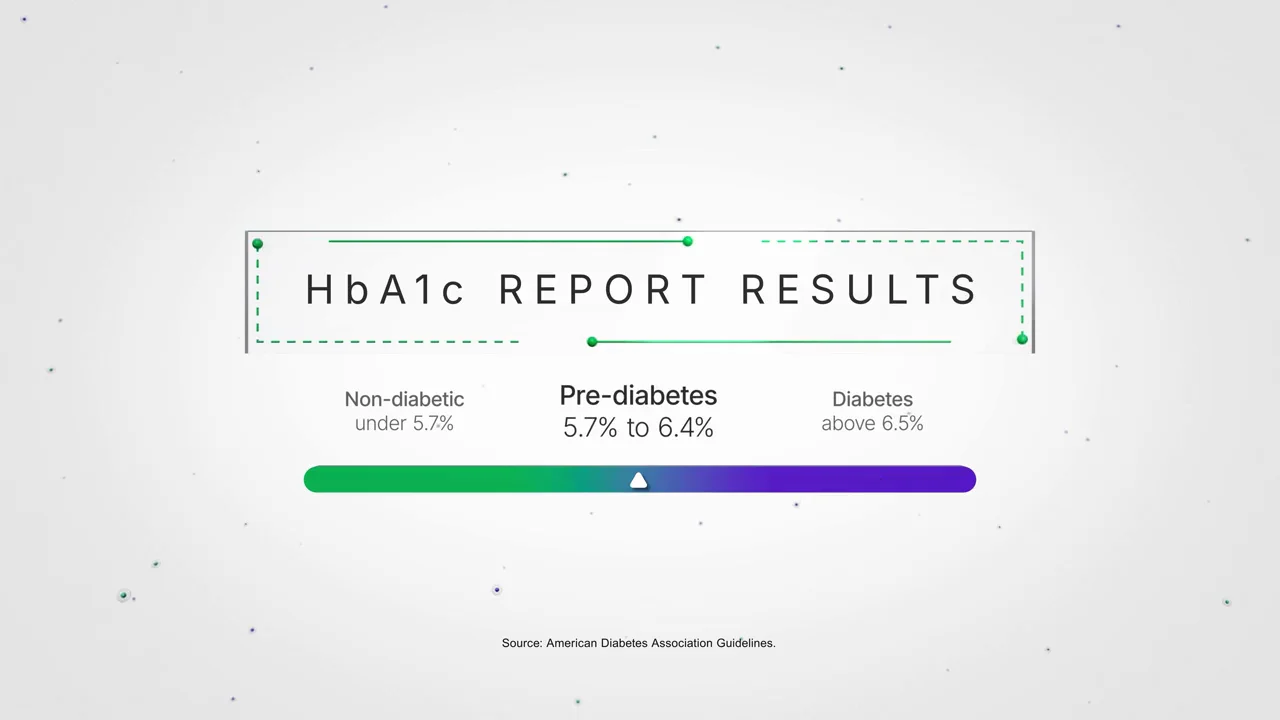
Watch this short video to learn how HbA1c testing can help you understand your blood sugar levels.
What is diabetes?
Diabetes is a condition where the amount of sugar (glucose) in your blood becomes too high because your body doesn’t make enough insulin or doesn’t use it properly.,2,3
Types include:
- Type 1 Diabetes
- Type 2 Diabetes
- Gestational Diabetes
- Type 3c Diabetes (Pancreatogenic Diabetes)
- Latent Autoimmune Diabetes in Adults (LADA)
- Maturity-Onset Diabetes of the Young (MODY)
- Neonatal Diabetes
When should you get tested for diabetes?
The American Diabetes Association (ADA) recommends getting tested for diabetes in the following situations:4
- You are 35 years or older
- You have HIV
- You are overweight (BMI over 25) and have one or more of these risk factors:
- You don’t get much physical activity
- You have a close family member with diabetes
- You belong to a group at higher risk for diabetes such as African, Asian, or Pacific Islander descent
- You have or had heart disease
- You have low “good” cholesterol (HDL) or high triglycerides,
- You have high blood pressure or take medicine for it
- You are a woman with polycystic ovary syndrome (PCOS)
- You have conditions linked to insulin resistance such as being overweight around the waist.
What is hemoglobinopathy and how does it relate to diabetes testing?
A hemoglobinopathy is an inherited blood disorder that affects how hemoglobin (the protein inside red blood cells that carries oxygen) is made or how it functions6. This condition is more common in people with African, Mediterranean, Middle Eastern, or Southeast Asian ancestry. When a hemoglobinopathy is present, the A1c portion of hemoglobin (HbA1c) may not form normally or may be produced in smaller amounts.
The hemoglobin A1c (HbA1c) test, often called simply the A1c test, measures how well a person’s blood sugar (glucose) has been controlled over the past three months. When sugar stays in the blood for long periods, it sticks to hemoglobin, forming glycated hemoglobin. Higher blood sugar levels cause more sugar to attach to the hemoglobin, leading to a higher A1c result. This test helps doctors diagnose diabetes and monitor long-term glucose control.
Testing blood sugar control with HPLC (high-performance liquid chromatography) or capillary electrophoresis (CE) can show how much glycated hemoglobin (HbA1c) is present in the blood. These methods can also help detect certain hemoglobin variants that may interfere with HbA1c measurement.
If A1c is not present because of a hemoglobin disorder, this test can help doctors identify an alternative way to evaluate the patient’s blood sugar control.
Get tested today to learn more about your health
Are you a Clinical Professional looking for educational or purchasing information?
Bio-Rad testing solutions to Testing for Hemoglobin A1c (HbA1c)
References:
- International Diabetes Federation. IDF Diabetes Atlas 11th Edition 2025. Brussels, Belgium: International Diabetes Federation; 2025. Accessed November 7, 2025.
- National Institute of Diabetes and Digestive and Kidney Diseases. What is diabetes? Accessed October 8, 2025.
- Petersmann A, Müller-Wieland D, Müller UA, Landgraf R, Nauck M, Freckmann G, Heinemann L, Schleicher E. Definition, Classification and Diagnosis of Diabetes Mellitus. Exp Clin Endocrinol Diabetes. 2019;127(S 01):S1-S7. doi:10.1055/a-1018-9078
- American Diabetes Association Professional Practice Committee (2023). Classification and Diagnosis of Diabetes: Standards of Medical Care in Diabetes-2023. Diabetes Care 46 (Suppl 1), S19-S40.
- Köhne E. Hemoglobinopathies: clinical manifestations, diagnosis, and treatment. Dtsch Arztebl Int. 2011 Aug;108(31-32):532-540. doi:10.3238/arztebl.2011.0532. PubMed PMID: 21886666; PubMed PMCID: PMC3163784.
- Klonoff DC. Hemoglobinopathies and Hemoglobin A1c in Diabetes Mellitus. J Diabetes Sci Technol. 2020;14(1):3-7. doi:10.1177/1932296819875996. PMCID: PMC7189151.
Disclaimer
The content on this website is for educational and informational purposes only and should not be considered medical advice or a recommendation for diagnosis or treatment. Always consult a qualified specialist when needed. Bio-Rad and contributors make no warranties regarding the accuracy or completeness of the information and disclaim all liability for its use. Users should review relevant updates and regulatory guidance.
These pages list our product offerings in these areas. Some products have limited regional availability. If you have a specific question about products available in your area, please contact your local sales office or representative.